


Cannabis diseases – nobody wants them, everyone gets them sometimes
You water, you ventilate, you take care – and suddenly that white film appears on the leaves. Or a bud starts rotting even though it looked like gold just moments ago. Welcome to the real life of a grower.
Diseases in cannabis plants are nothing new – and they're pretty persistent once you've got them. Powdery mildew, botrytis, root rot... these aren't just annoying terms, they're real harvest killers. Especially when you don't know how to identify them or, even better, how to keep them out in the first place.
That's exactly what this is about: How to keep your plants healthy, what you need to watch out for when growing – and what you can do if something does sneak in. No beating around the bush, no panic mongering. Just honest tips from practice.
Growing healthy from the start – how to keep diseases out
The best medicine against plant diseases? Not getting any in the first place. Sounds simple, and basically it is – if you follow a few fundamentals. Many diseases don't develop because you're doing something completely wrong, but because small negligences add up. And that's exactly where we start.
Here are the basics to keep your plants from getting into trouble:
Fresh air is mandatory
Poor air circulation is the best friend of fungi and mold. Whether indoor or outdoor – your plants need air movement. In a tent this means: at least one circulation fan, plus an exhaust system that pulls out the humid air. Without this it quickly becomes tropical. And fungi love that.
Keep humidity under control
Humid air + flowering phase = invitation for botrytis.
A rough guideline:
-
In the vegetative phase it can be a bit more humid (50–70%).
-
In flowering you want to get down to 40–50%. Lower is better than higher.
A hygrometer costs a few bucks – but saves you a lot of stress.
Don't plant too densely
Sounds trivial, but many overcrowd their grow room. More plants doesn't automatically mean more yield. When leaves are touching and no light or air can get through, it becomes warm and humid – and that's exactly the climate that diseases love.
Work cleanly
Old soil, dirty tools, a bit of mold here, a bit of pest there – it happens faster than you think.
So: clean tools, don't use contaminated soil, and regularly check the environment. Even shoes can bring in pathogens – especially with indoor grows.
Avoid stress
A healthy plant copes better when something goes wrong. But when it's stressed – from wrong pH values, overwatering, light problems, or nutrient deficiency – it's more susceptible to diseases. So check regularly and identify problems early.

Cannabis Disease #1: Powdery Mildew
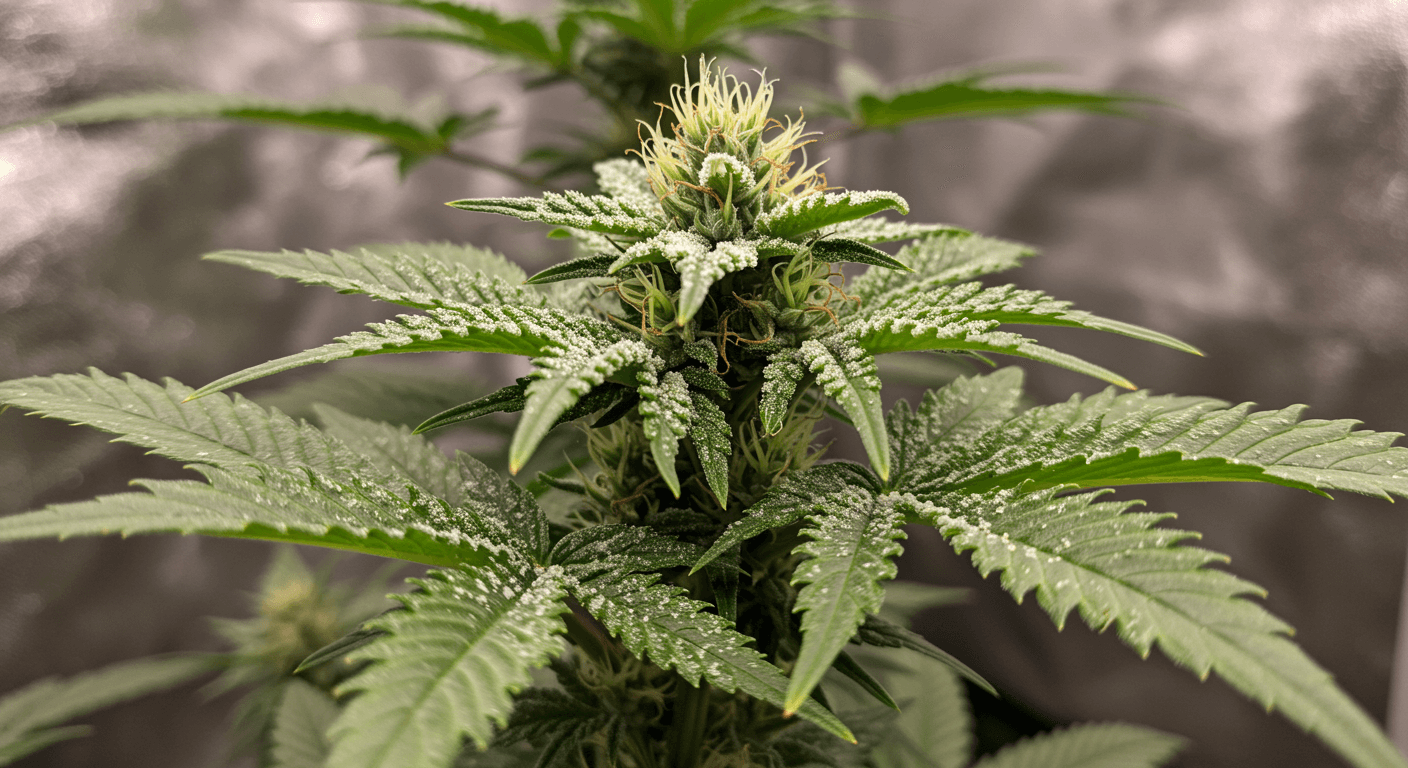
Powdery mildew is one of the most common fungi in cannabis cultivation – and it usually shows up as a white, powdery coating on the leaves. Initially barely noticeable, it spreads quickly, weakens the plant, and slows growth. The leaves yellow, look limp, and in the worst case die off completely.
Powdery mildew is mainly caused by high humidity, poor air circulation, and closely spaced plants. Those who ventilate little or plant their plants too densely create perfect conditions for the fungus.
For prevention, stable humidity under 50%, regular thinning, and active airflow in the grow help. If the fungus is there, affected leaves should be removed immediately and the plant treated with neem oil or a mild baking soda solution. With severe infestation, only thorough cleaning of the entire grow helps.
Cannabis Disease #2: Botrytis (Bud Rot)
Botrytis – also known as bud rot – is one of the worst diseases in the later stages of growing. The mold sits deep inside the buds, where it unnoticed devours entire buds. From the outside everything often looks good until suddenly part of the bud becomes brown, soft, or even slimy. A sweetish-musty smell is often the first real warning sign.
The main cause is high humidity during the flowering phase, especially with dense, poorly ventilated buds. When air doesn't circulate and the climate remains too humid, botrytis strikes mercilessly.
Prevention is possible through dry flowering climate (max. 45% humidity), good thinning, and strong air circulation. When bud rot is discovered, there's no salvation – affected buds must be removed and disposed of immediately before the mold spreads further.
Cannabis Disease #3: Spider Mites
Spider mites are tiny creatures you can barely see – but their traces are unmistakable. They suck on the leaves from below, causing small light spots on the top. Later the leaves appear speckled, dry out, and curl up. Fine webs in the leaf joints are the surest sign: now it's serious.
Infestation usually occurs through dry, warm air – a climate that indoor grows often offer during the vegetative phase. Spider mites reproduce extremely quickly, especially when there are no natural enemies present.
For prevention, it helps to keep humidity somewhat higher (over 50%) and regularly check plants. At first signs, neem oil, potassium soap, or predatory mites can help. Important: disrupt the mites' life cycle – otherwise they'll be back in a few days.
Cannabis Disease #4: Root Rot
You don't see root rot immediately, but the plant shows you pretty quickly that something's wrong below: the leaves droop, turn yellow or spotted, even though you've actually done everything right. Growth stops, the plant looks limp – and when repotting it smells rotten from the root ball. Then you know: the roots are done for.
The cause almost always lies in too much water and too little oxygen at the roots. Waterlogging, poor drainage, or compacted substrate create an oxygen-poor environment where bacteria and fungi have free rein.
Prevention means: permeable substrate, don't overwater, pots with drainage, and regular checking. Those growing hydroponically should pay attention to clean systems and well-aerated water. If rot is there, usually only helps: remove affected parts, repot, and hope the plant recovers.
Conclusion: Those who know their plants stay ahead of diseases
Cannabis diseases are annoying, but no reason to panic – as long as you know what to watch for. Most problems don't develop overnight, but because somewhere in the system there's a small error: too humid, too still, too close together, or too little attention.
With a clean setup, fresh air, some observation skills, and the right reaction in an emergency, you have the best cards. And if something does occur? No drama. Nature is robust – and you will be too, once you've walked through the valley of wilted leaves.
Keep it clean, keep it dry – and above all: Learn to read your plants. Then they won't preach mold sermons to you anymore either.


Leave a comment
This site is protected by hCaptcha and the hCaptcha Privacy Policy and Terms of Service apply.